

Find the Right Balance of Power, Comfort, and Control for Your Next Ride
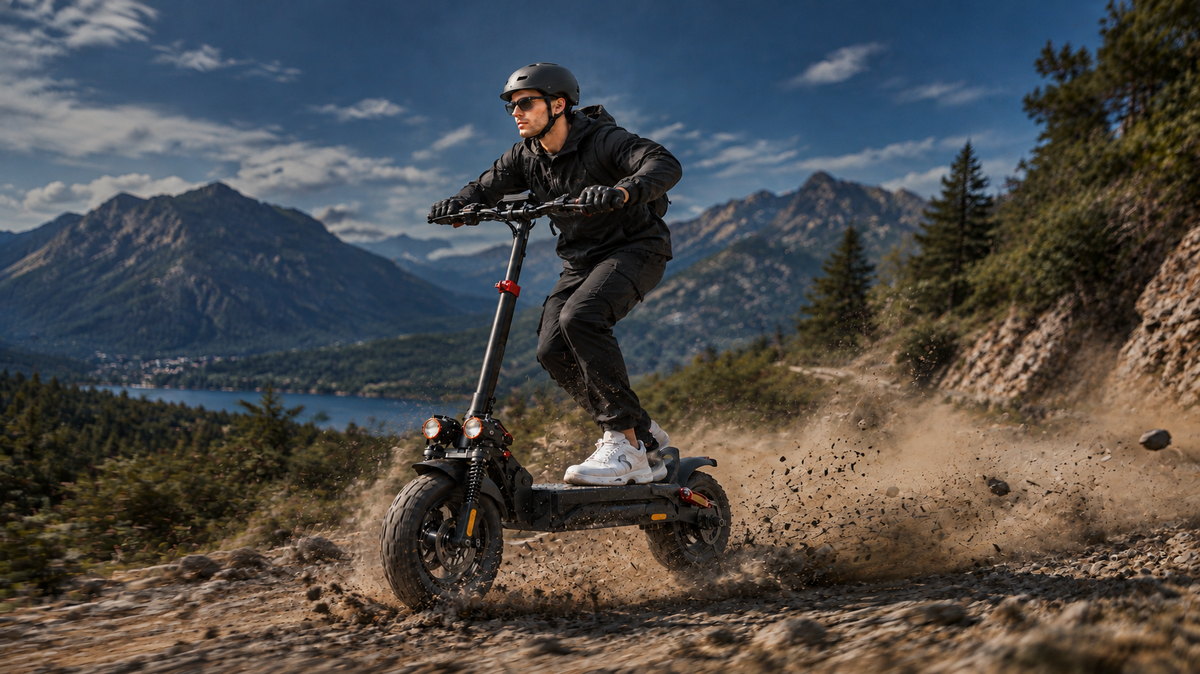
Not every great ride happens on smooth city pavement. Sometimes, the best routes include compact gravel paths, uneven private roads, dirt tracks, and the occasional uphill stretch.
But riding on these surfaces requires more than just a powerful motor. The right electric scooter needs dependable tires, effective suspension, responsive braking, and enough battery capacity to get you there and back.
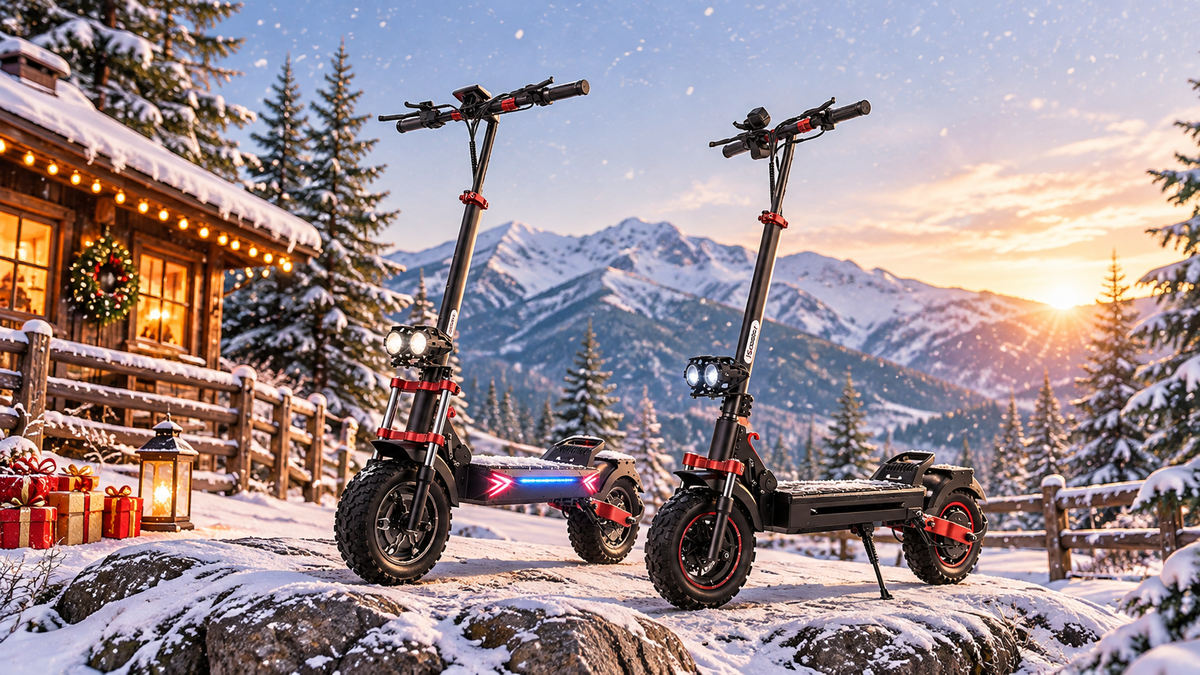
If you're considering an electric scooter for light off-road riding, the iScooter iX4 and iScooter iF1 offer two different configurations worth exploring. Both feature 10-inch off-road tires, front and rear suspension, and dual disc brakes, but they differ in motor power, battery configuration, and overall riding priorities.
So, what should you look for before choosing an off-road electric scooter? Let's break it down.
What Counts as Light Off-Road Riding?
Before comparing electric scooters, it's important to understand what light off-road riding actually involves.
Light off-road riding generally refers to relatively manageable surfaces that are less predictable than regular pavement but don't require specialized extreme-terrain equipment.
Typical examples include:
-
Compact gravel paths: Firm, packed gravel with relatively consistent surfaces.
-
Uneven private roads: Rural roads with cracks, small bumps, and occasional loose stones.
-
Dry dirt tracks: Relatively firm trails without deep mud or loose sand.
-
Gentle hills: Moderate inclines where the scooter can maintain controlled acceleration and braking.
These conditions are different from technical mountain trails, deep mud, rocky descents, or water crossings. Those environments require specialized equipment and riding skills.
For everyday riders who want to explore beyond smooth pavement, choosing a scooter designed with off-road-oriented components can make a noticeable difference.
Which Features Matter Most for Light Off-Road Electric Scooters?
A scooter that performs well on smooth pavement may feel very different on gravel or uneven ground. Here are four features worth paying attention to.
1. Off-Road Tires: Start with the Ground Beneath You
Your tires are the only parts of the scooter that directly contact the riding surface. Their size, construction, and tread design all influence traction and handling.
For light off-road conditions, consider:
-
Larger wheel size: 10-inch tires can help roll over small surface irregularities more comfortably than smaller wheels.
-
Pneumatic construction: Air-filled tires provide some natural cushioning over minor bumps.
-
Off-road tread: A more pronounced tread pattern can help provide grip on suitable loose surfaces.
Tubeless pneumatic tires are another practical feature. They don't use a separate inner tube, although they still require regular pressure checks and puncture inspections.
Remember that even off-road tires have limitations. Loose gravel, wet leaves, and muddy surfaces can reduce traction. Always adjust your speed and riding technique to the conditions.
2. Front and Rear Suspension: Make Uneven Roads More Manageable
A rough surface can send repeated vibrations through the handlebar, deck, and your feet.
That's where suspension becomes important.
Front and rear suspension helps absorb impacts as the wheels travel over bumps and uneven ground. It can make longer rides on imperfect surfaces feel more controlled and comfortable.
When comparing scooters, look beyond the word "suspension." Consider the actual suspension arrangement and how it is designed to handle repeated impacts.
A good suspension system doesn't make every trail suitable, but it can help reduce the harshness of everyday surface irregularities.
3. Braking Performance: Control Matters More Than Speed
Power and speed may attract attention, but braking deserves just as much consideration.
On loose surfaces, stopping distances can increase because the tires may have less traction.
Look for a braking system that combines dependable mechanical braking with electronic assistance.
Dual disc brakes provide mechanical stopping power at the front and rear, while electronic braking offers an additional braking function.
Good riding habits matter just as much:
-
Test your brakes before each ride.
-
Apply braking progressively rather than suddenly.
-
Leave extra stopping distance on gravel or uneven ground.
-
Reduce speed before approaching corners or downhill sections.
The goal isn't simply to ride faster. It's to maintain control throughout the ride.
4. Battery Capacity and Range: Plan the Entire Journey
A scooter's advertised maximum range is useful for comparison, but it shouldn't be treated as a guaranteed distance.
Actual range can vary depending on:
-
Rider weight and carried cargo.
-
Terrain and elevation changes.
-
Riding speed and acceleration frequency.
-
Outdoor temperature and wind.
-
Tire pressure and battery condition.
For example, a 10-mile outward journey requires at least 20 miles of travel for the round trip, even before considering detours.
If your route includes hills or rougher surfaces, plan for additional battery reserve.
A larger battery capacity can provide more flexibility, but your actual riding distance will always depend on the conditions.
iX4 vs. iF1: Which iScooter Is Better for Your Riding Style?
Once you understand the features that matter, the next step is choosing a configuration that fits your needs.
The iScooter iX4 and iF1 share several off-road-oriented features, but their differences may make one a better match for your riding habits.
iScooter iX4: A Balanced Choice for Everyday Exploration
If you want a scooter that can handle everyday riding while offering additional capability for light off-road adventures, the iX4 is worth considering.
With an 800W peak motor and a 48V 15Ah battery, it combines practical everyday performance with a relatively large battery capacity.
Its key features include:
-
800W Peak Motor: Delivers power for everyday riding and suitable inclines.
-
Up to 28 MPH: Offers a faster riding experience when conditions and local regulations permit.
-
Up to 28 Miles of Range: Provides room for longer rides, depending on conditions.
-
10-Inch Off-Road Pneumatic Tires: Designed for varied riding surfaces.
-
Front and Rear Suspension: Helps absorb bumps on uneven roads.
-
330 lbs Maximum Load: Offers a higher listed payload capacity.
The iX4 is particularly interesting for riders who value battery capacity and want one scooter for a mix of everyday routes and occasional outdoor exploration.
At approximately 55 lbs, however, it's worth considering how you plan to transport and store it.
Who is the iX4 suitable for?
-
Riders who split their time between paved roads and compact gravel.
-
People who prioritize a larger listed battery capacity.
-
Adults looking for a versatile scooter for commuting and recreational rides.
-
Riders who want a more substantial everyday electric scooter.
Explore the iScooter iX4.
iScooter iF1: More Peak Motor Power for Versatile Riding
For riders who want a stronger motor rating and a different suspension configuration, the iF1 offers another option.
Its 1200W peak motor provides a higher advertised peak power rating than the iX4, while its 10-inch off-road tires and front and rear swingarm suspension are designed for varied riding conditions.
Here are its key features:
-
1200W Peak Motor: Offers a higher peak motor rating for riders who want more power.
-
Up to 28 MPH: A maximum advertised speed for suitable riding conditions.
-
Up to 32 Miles of Range: Provides flexibility for longer recreational rides.
-
10-Inch Off-Road Tires: Designed to handle more varied surfaces.
-
Front and Rear Swingarm Suspension: Helps absorb impacts on uneven roads.
-
Dual Disc Brakes: Provides mechanical braking at both ends.
-
Approximately 50 lbs: A practical consideration for storage and transportation.
The iF1 also features multiple riding modes, allowing riders to choose different speed settings according to their experience and riding conditions.
Its combination of peak motor power, suspension, and off-road-oriented tires makes it an interesting option for riders who want a versatile scooter with a stronger power specification.
Who is the iF1 suitable for?
-
Riders who prioritize a higher peak motor rating.
-
Adults who enjoy weekend recreational riding.
-
Riders who want to combine paved roads with suitable private dirt and gravel paths.
-
People looking for a balance of power, portability, and versatility.
Explore the iScooter iF1.
iX4 vs. iF1: A Quick Comparison
| Feature | iX4 | iF1 |
|---|---|---|
| Peak Motor | 800W | 1200W |
| Max Speed | 28 MPH | 28 MPH |
| Max Range | 28 Miles | 32 Miles |
| Battery | 48V 15Ah | See product specifications |
| Tire Size | 10 inches | 10 inches |
| Tire Type | Off-road pneumatic | Off-road |
| Suspension | Front & rear suspension | Front & rear swingarm |
| Brakes | Dual disc + electronic | Dual disc + electronic |
| Listed Weight | 55 lbs | 50 lbs |
| Maximum Load | 330 lbs | 264 lbs |
Specifications are based on the respective US product listings. Maximum speed and range are manufacturer-rated figures, not guaranteed real-world results. Actual performance varies with riding conditions, rider weight, terrain, temperature, and other factors.
How to Prepare for a Light Off-Road Ride
Choosing the right scooter is only part of the equation. A little preparation can make your riding experience safer and more predictable.
Check Your Route Before You Ride
Don't assume every dirt path or gravel road is suitable for an electric scooter.
Before setting out:
-
Check whether the route allows electric scooter use.
-
Look for loose gravel, potholes, wet leaves, and steep sections.
-
Avoid deep mud, large rocks, and water crossings.
-
Make sure the route has enough room for turning and stopping.
-
Plan your return journey rather than focusing only on the outward distance.
In the United States, electric scooter laws vary by state and local jurisdiction. Check the applicable rules for your location, including speed limits, helmet requirements, age restrictions, and where private scooters are permitted. When riding on private property, obtain the owner's permission.
Inspect Your Scooter Before Every Ride
A quick inspection can help identify problems before they become bigger issues.
Check the following:
-
Tire pressure and visible tire damage.
-
Brake response and brake components.
-
Suspension and folding mechanisms.
-
Battery level and electrical connections.
-
Headlights, taillights, and turn signals.
If anything feels loose, damaged, or unusual, address it before riding.
Adjust Your Riding Style to the Surface
Different surfaces require different approaches.
On compact gravel, maintain a steady and moderate speed. On uneven ground, keep your knees slightly bent and avoid abrupt steering movements.
When approaching a downhill section, slow down before the descent rather than waiting until you're already moving downhill.
And remember: riding within your experience level is more important than testing the limits of your scooter.
Frequently Asked Questions
1. Can electric scooters ride on gravel roads?
Some electric scooters are designed to handle compact gravel and other relatively manageable surfaces. Models with pneumatic tires, suitable suspension, and effective braking can be more comfortable on these routes. However, deep gravel, loose stones, and muddy terrain can still create traction problems.
2. Are 10-inch tires good for light off-road riding?
10-inch tires can help electric scooters handle small surface irregularities more comfortably than smaller wheels. When combined with pneumatic construction and an appropriate tread pattern, they can be useful for compact gravel and uneven private roads.
3. Is suspension important for off-road electric scooters?
Yes. Front and rear suspension can help absorb repeated impacts from bumps and uneven surfaces. It can improve comfort and help maintain a more controlled ride, although it doesn't make a scooter suitable for every type of terrain.
4. Is a higher-wattage motor always better for off-road riding?
Not necessarily. A higher peak motor rating can offer additional power potential, but actual hill-climbing performance also depends on battery output, controller settings, rider weight, terrain, and other factors. Tires, suspension, and braking are equally important when choosing a scooter for light off-road use.
5. Should I choose the iX4 or iF1?
It depends on what matters most to you.
The iX4 offers a larger listed battery capacity and higher maximum load, making it worth considering for riders who prioritize battery capacity and everyday versatility.
The iF1 features a higher peak motor rating, a different swingarm suspension arrangement, and a lighter listed weight. It may appeal more to riders who prioritize motor power and recreational versatility.
Both offer 10-inch off-road tires, front and rear suspension, and a maximum advertised speed of 28 MPH.
Find Your Next Route with iScooter
A great ride isn't always about how fast you can go or how far you can travel. Sometimes, it's about having the right equipment to explore a little further and enjoy more of the journey.
Whether you prefer the battery-focused configuration of the iX4 or the higher peak motor rating of the iF1, iScooter offers options for riders looking to go beyond smooth city pavement.
Explore the models, compare their features, and find the scooter that fits your next adventure.
Ready to explore?
Ride smart. Ride prepared. Ride iScooter.