

Which off-road electric scooter fits California riding?
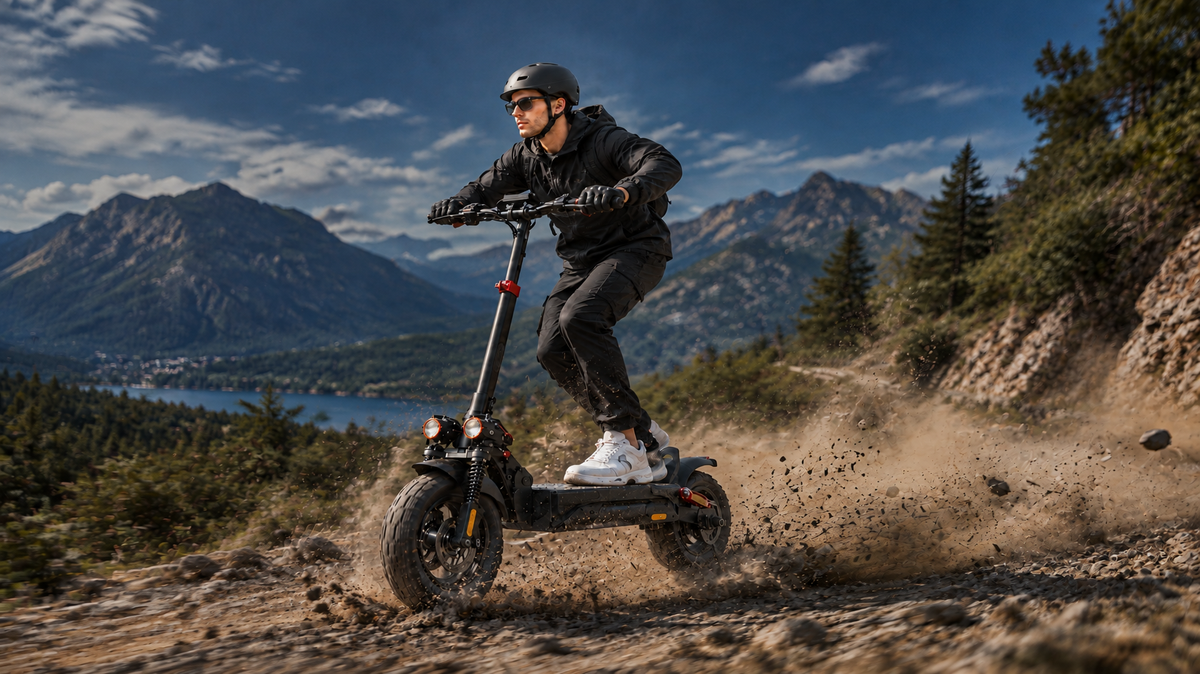
California offers a wide range of outdoor riding environments. From the dry desert landscapes around Southern California to the rolling foothills, mountain roads, and forest surroundings farther north, the state gives outdoor enthusiasts plenty of opportunities to explore beyond ordinary city streets.
But not every electric scooter is suited to every surface. A paved road with occasional bumps requires a different setup from a gravel trail, a dusty dirt road, or a steep hillside. Tire design, suspension, motor power, braking performance, and realistic battery range all influence how a scooter performs.
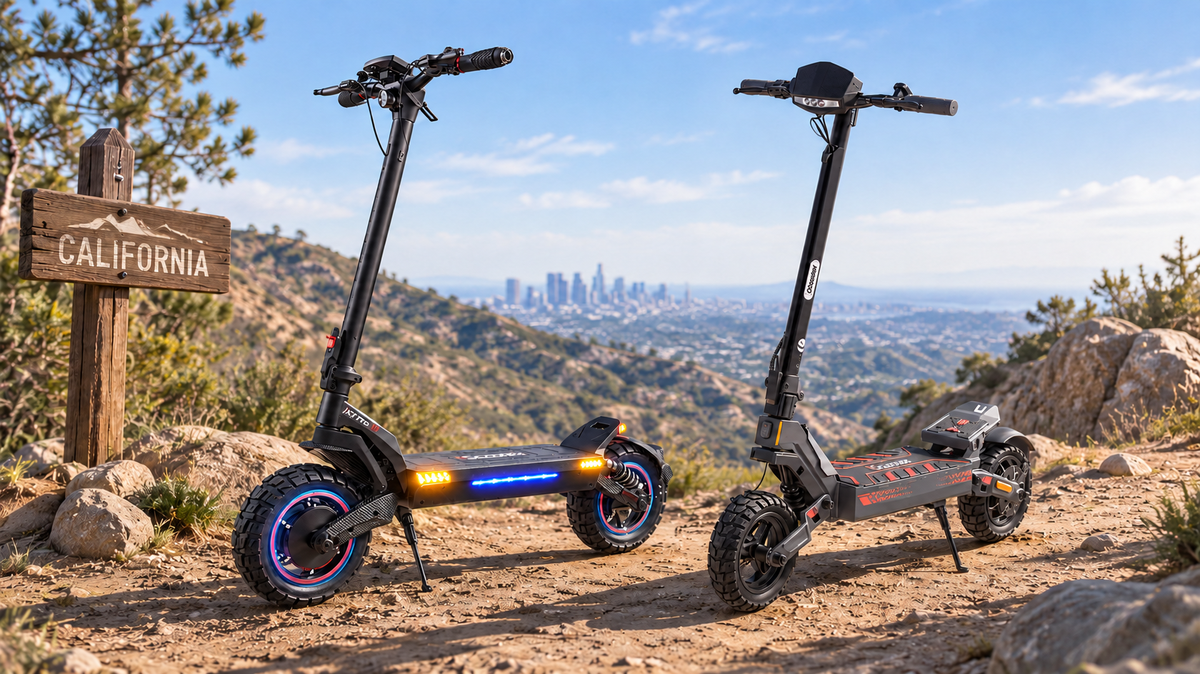
For riders looking for a capable off-road electric scooter, the iScooter iX7 Pro and iScooter iF1 offer two different approaches. The iX7 Pro focuses on stronger dual-motor performance, longer advertised range, and more demanding terrain. The iF1 offers a lighter setup with off-road tires and front and rear suspension for riders who want to explore less demanding routes.
Before choosing a model, it helps to understand the terrain you expect to ride, the distance you plan to cover, and where electric scooters are legally permitted.

What makes an electric scooter suitable for California terrain?
California's landscape is diverse, so the right scooter depends on where and how you ride. A scooter that feels comfortable on a smooth neighborhood road may struggle on loose gravel or uneven dirt.
Understand the terrain before choosing a scooter
Different parts of California offer different riding conditions:
-
Southern California deserts: Dry, sandy surroundings and loose dirt can make traction and tire stability especially important.
-
Mountain foothills: Rolling terrain and changing elevations make motor performance, hill-climbing ability, and braking control worth considering.
-
Northern California forest areas: Uneven ground, gravel roads, and changing surface conditions call for effective suspension and suitable tires.
-
Coastal and suburban areas: Riders may encounter paved paths, rough pavement, and occasional dirt sections, making a versatile setup useful.
These are broad landscape descriptions, not permission to ride any particular trail. Public access rules vary by land manager, park, and trail.
Look beyond motor power
A high motor rating can be attractive, but it is only one part of an off-road setup. Before buying, consider these essentials:
1. Off-road tires
Tires are the scooter's main contact with the ground. Pneumatic tires with an off-road tread pattern can provide a more suitable setup for dirt and gravel than smooth street tires. Tire pressure also matters: follow the manufacturer's recommended pressure and inspect the tires before each ride.
2. Front and rear suspension
Uneven surfaces can create repeated impacts through the handlebars and deck. Front and rear suspension can help absorb some of those impacts and make a ride more controlled. However, suspension does not eliminate the need to slow down for rocks, holes, and sudden changes in terrain.
3. Motor power and hill-climbing ability
California's foothills and mountain areas can include sustained climbs. Motor output and the scooter's drive configuration are important considerations, especially when carrying additional rider weight. A dual-motor system can provide more drive capability, although actual performance depends on the slope, surface, battery charge, and riding conditions.
4. Braking performance
A scooter needs reliable braking just as much as it needs acceleration. Disc brakes and electronic braking systems can offer additional braking control, but riders should still maintain a safe speed and leave enough stopping distance on loose or downhill surfaces.
5. Realistic battery range
Advertised maximum range is usually measured under controlled conditions. Rider weight, speed, elevation changes, tire pressure, temperature, and the use of dual-motor mode can all affect actual range. For longer outdoor rides, plan around a conservative estimate rather than the maximum advertised figure.
How to plan an off-road ride in California
A little preparation can make the difference between an enjoyable outdoor trip and an inconvenient one. Before heading out, consider the route, surface, weather, and battery requirements.
Choose a route that matches your scooter
Start with a route you can realistically manage. If you are new to off-road riding, avoid beginning with steep, rocky, or unfamiliar terrain.
Check the route's surface and elevation changes in advance. A short route with a steep climb can place more demand on a scooter than a longer, relatively flat ride.
Also confirm that the specific route allows your type of electric scooter. A trail being open to bicycles, motorcycles, or other off-highway vehicles does not automatically mean it permits a high-powered stand-up electric scooter.
Plan for distance and battery use
Consider the entire journey, including the return trip. A route that looks manageable on a map may use more battery than expected when it includes hills, loose ground, or frequent acceleration.
For example, a rider planning a weekend trip through a foothill area should consider the elevation gain, expected riding speed, and whether a safe charging option is available afterward.
If you are using a dual-motor scooter, remember that running both motors at higher speeds can consume battery more quickly. Leaving a reasonable battery reserve is more practical than planning to use the full advertised range.
Check the weather and riding conditions
California is known for its sunny weather, but conditions can change significantly between coastal, desert, and mountain areas.
Hot weather can make long outdoor rides more demanding. Loose sand, wet ground, and dusty surfaces can also affect traction and braking. Check the forecast, bring enough water, and avoid riding through terrain that is beyond your experience or the scooter's intended use.
Compare two iScooter off-road electric scooters
The iX7 Pro and iF1 are designed for riders who want more than a basic city commuter scooter. Both feature off-road tires and suspension, but they differ in motor configuration, advertised performance, weight, and intended riding style.
iScooter iX7 Pro: Dual-motor power for demanding rides
The iScooter iX7 Pro is the more performance-focused option in this comparison. Its dual-motor drive system delivers a combined peak output of 2,000W, giving it a stronger power setup for riders who want additional acceleration and climbing capability.
It has 10-inch off-road tubeless tires and dual front and rear suspension. Together, these features make it a compelling option to consider for riders who regularly encounter uneven ground, gravel sections, and changing elevations.
The listed maximum speed is up to 38 MPH, and the advertised maximum range is up to 50 miles. These are product specifications, not recommended speeds or guaranteed distances for off-road riding. Actual range will vary with riding mode, terrain, rider weight, and other conditions.

Other practical features include:
-
Dual 1,200W motors, with 2,000W combined peak output
-
Dual-wheel drive
-
10-inch off-road tubeless tires
-
Dual front and rear suspension
-
Double disc brakes and EABS
-
48V 15Ah battery
-
Up to 50 miles of advertised range
-
Maximum listed rider load of 330 lbs
-
Net weight of approximately 65.5 lbs
The iX7 Pro is worth considering for experienced riders who prioritize power, climbing capability, and longer outdoor routes. Its weight is also an important consideration: at approximately 65.5 lbs, it may be less convenient to carry up stairs or lift into a vehicle.
Explore the iScooter iX7 Pro.
iScooter iF1: A lighter option for everyday exploration
The iScooter iF1 takes a different approach. With a listed weight of approximately 50 lbs, it is lighter than the iX7 Pro and may be easier to handle when storage or transportation is part of your routine.
Its 1,200W motor, 10-inch off-road tires, and front and rear swingarm suspension provide a combination of features for riders who want to explore rougher surfaces without choosing a heavier dual-motor model.
The advertised maximum speed is up to 28 MPH, with a maximum listed range of up to 32 miles. It also features front and rear disc brakes with an electric braking system.

Key specifications include:
-
1,200W motor
-
Up to 28 MPH advertised maximum speed
-
Up to 32 miles of advertised range
-
10-inch off-road tires
-
Front and rear swingarm suspension
-
Front and rear disc brakes with electric braking
-
Approximately 50 lbs net weight
-
Maximum listed load of 264 lbs
The iF1 may suit riders who want a more manageable scooter for shorter outdoor trips, mixed surfaces, and occasional light off-road exploration. Its rear-wheel-drive configuration also makes it a different proposition from the dual-motor iX7 Pro.
Explore the iScooter iF1.
iX7 Pro vs. iF1: Which one should you choose?
| Feature | iX7 Pro | iF1 |
|---|---|---|
| Motor | Dual motor, 2,000W peak combined | 1,200W |
| Drive | Dual-wheel drive | Rear-wheel drive |
| Advertised top speed | Up to 38 MPH | Up to 28 MPH |
| Advertised max range | Up to 50 miles | Up to 32 miles |
| Tire size | 10-inch off-road tubeless | 10-inch off-road |
| Suspension | Front and rear | Front and rear swingarm |
| Brakes | Dual disc + EABS | Dual disc + electric braking |
| Net weight | Approx. 65.5 lbs | Approx. 50 lbs |
| Maximum listed load | 330 lbs | 264 lbs |
The main difference is the riding setup. The iX7 Pro offers dual-motor power, a higher advertised top speed, and a longer advertised range. The iF1 is lighter and uses a single rear-wheel-drive motor.
Neither model should be chosen based on maximum speed alone. Think about your route, experience level, storage needs, and the local rules that apply to the places where you plan to ride.
Which scooter fits your riding style?
For riders who prioritize power and longer routes
If your priority is a more powerful setup, the iX7 Pro is the stronger match on paper. Its dual-motor configuration, 25% listed climbing capability, and 50-mile advertised maximum range make it the performance-focused choice in this comparison.
It is worth considering for riders who want more power available for permitted private-property riding and suitable off-road environments. Keep in mind that the scooter's weight and battery consumption at higher speeds should be part of your buying decision.
For riders who want a lighter setup
If you prefer a scooter that is easier to move and store, the iF1 may be the more practical option. Its approximately 50-lb weight is lower than the iX7 Pro's, while its off-road tires and front and rear suspension provide features suited to occasional rough-surface riding.
It is a reasonable option to consider for shorter rides and less demanding terrain, provided the route permits the vehicle.
For first-time off-road riders
If you are new to riding away from smooth pavement, start with a manageable route and a conservative riding mode. Practice braking, turning, and controlling your speed on a suitable private property before attempting more challenging terrain.
A powerful scooter does not automatically make an inexperienced rider ready for steep or rocky trails. Your riding skills, protective equipment, and route choice matter just as much as the vehicle.
California electric scooter laws: What riders should know
Before riding in California, understand how the state classifies motorized scooters and off-highway vehicles.
California's Department of Motor Vehicles describes a motorized scooter as a two-wheeled device with handlebars and a floorboard designed for standing. Under the state's motorized scooter rules, the maximum operating speed is 15 MPH. Riders must have a valid driver's license or permit, and a properly fitted bicycle helmet is required. Motorized scooters may be used on bicycle paths, trails, and bikeways unless local authorities prohibit them, but they cannot be ridden on sidewalks.
You should not assume that a high-performance scooter advertised at 28 MPH or 38 MPH automatically qualifies for unrestricted public-road or public-trail use. The vehicle's classification and the applicable rules matter, not just the product's marketing category.
California also has separate requirements for off-highway vehicles. Certain registered OHVs can be used in designated riding areas, but this does not mean every electric scooter is eligible. Check the vehicle's legal classification, identification or registration requirements, and the specific area's access rules before planning a ride.
For official information, consult:
When riding on private property, obtain the landowner's permission. Always follow posted restrictions and local regulations.
Safe riding habits and common mistakes
Off-road riding requires more attention than riding on smooth pavement. Uneven ground, loose gravel, and downhill sections can change how a scooter responds.
Do
-
Wear protective equipment. Use a properly fitted helmet, gloves, and suitable protective clothing.
-
Inspect your scooter. Check tire pressure, brakes, lights, and folding components before riding.
-
Start slowly. Get familiar with the throttle and braking response before increasing speed.
-
Keep a safe distance. Loose surfaces and downhill sections can increase stopping distance.
-
Plan your battery use. Leave enough charge for the return trip and unexpected detours.
-
Stay on permitted routes. Respect trail signs, closures, wildlife, and other trail users.
Don't
-
Don't treat maximum speed as a target. Ride at a speed appropriate for the surface, visibility, and your experience.
-
Don't assume every dirt trail is open to scooters. Access rules vary by location and vehicle type.
-
Don't ride beyond the scooter's intended conditions. Deep sand, large rocks, steep drops, and technical motorcycle trails may be unsuitable.
-
Don't ignore weather conditions. Wet ground, extreme heat, and poor visibility can increase riding risks.
-
Don't rely on advertised range as a guarantee. Plan conservatively, especially on hilly routes.
Choose an off-road electric scooter that fits your California adventures
California offers plenty of outdoor scenery, but choosing the right electric scooter starts with understanding the terrain and where you can legally ride.
The iX7 Pro and iF1 offer two different options for off-road-minded riders. The iX7 Pro stands out with its dual-motor system, higher advertised speed, and longer advertised range. The iF1 offers a lighter configuration with off-road tires and front and rear suspension.
Before making a decision, compare the specifications with your intended riding conditions, consider the scooter's weight and storage requirements, and check local access rules.
The best off-road electric scooter is not necessarily the one with the biggest numbers. It is the one that fits your riding style, your route, and the conditions you are prepared to handle.
FAQ
1. Are off-road electric scooters suitable for California's desert terrain?
Some off-road electric scooters can handle packed dirt and light gravel, but loose sand, deep dust, and rocky surfaces can be challenging. Look for models with pneumatic off-road tires, reliable suspension, and sufficient motor power. Always check whether the specific riding area permits electric scooters.
2. Can I use an electric scooter on mountain trails in California?
Not all mountain trails allow electric scooters. Access rules vary depending on the trail, land manager, and vehicle classification. Before riding, check whether motorized scooters are permitted, especially in state parks and designated OHV recreation areas.
3. What type of electric scooter is best for riding on gravel and dirt roads?
A scooter with off-road tires, front and rear suspension, and responsive braking is generally better suited to gravel and dirt roads than a basic commuter model. Motor power also matters when riding on uneven terrain or moderate inclines. However, these features do not make a scooter suitable for technical off-road trails.
4. Does California's hot weather affect electric scooter battery performance?
Yes. High temperatures can affect battery performance and long-term battery health. Riding in extreme heat may also increase the risk of overheating, particularly during demanding rides. Avoid leaving your scooter in direct sunlight for extended periods and follow the manufacturer's recommended charging and storage temperatures.
5. What makes the iX7 Pro and iF1 suitable for different off-road riding conditions?
The iX7 Pro is designed for riders who want stronger motor performance, with dual motors delivering 2,000W combined peak output. Its 10-inch off-road tubeless tires and dual suspension make it suitable for exploring permitted routes with varying surface conditions. The iF1 features a 1,200W single motor, 10-inch off-road tires, and front and rear swingarm suspension, offering a different balance of power and everyday usability. Both models are designed for different riding preferences and should be used within their intended terrain capabilities.
6. Can the iX7 Pro and iF1 handle both paved roads and off-road surfaces?
Yes. Both the iX7 Pro and iF1 feature off-road tires and front and rear suspension, making them suitable for more than just smooth pavement. The iX7 Pro offers dual-motor power for riders who want additional performance on inclines and uneven surfaces, while the iF1 provides a 1,200W single-motor setup for less demanding routes. Whether you're riding on paved roads, packed dirt, or gravel, choose a route that matches your experience and the scooter's capabilities. Always check local access restrictions before riding in California.